
Don’t be fooled by the recent snowfall — our extremely mild winter has also been extremely dry. A winter drought can be particularly detrimental to trees’ health because we’re less likely to think of watering during the winter. Even while dormant during the winter months, trees and their roots are alive. Preservation Tree Care, the arborists who treat and maintain Lowry’s LCMA-owned tree canopy, provides this list of potential ill effects of winter drought:
- Root dieback that permanently limits water uptake and leads to crown dieback
- Cold injury worsened by dry, uninsulated soils
- Delayed or weak spring leaf-out
- Progressive canopy decline and increased branch failure
- Stress that compounds year after year, shortening a tree’s lifespan
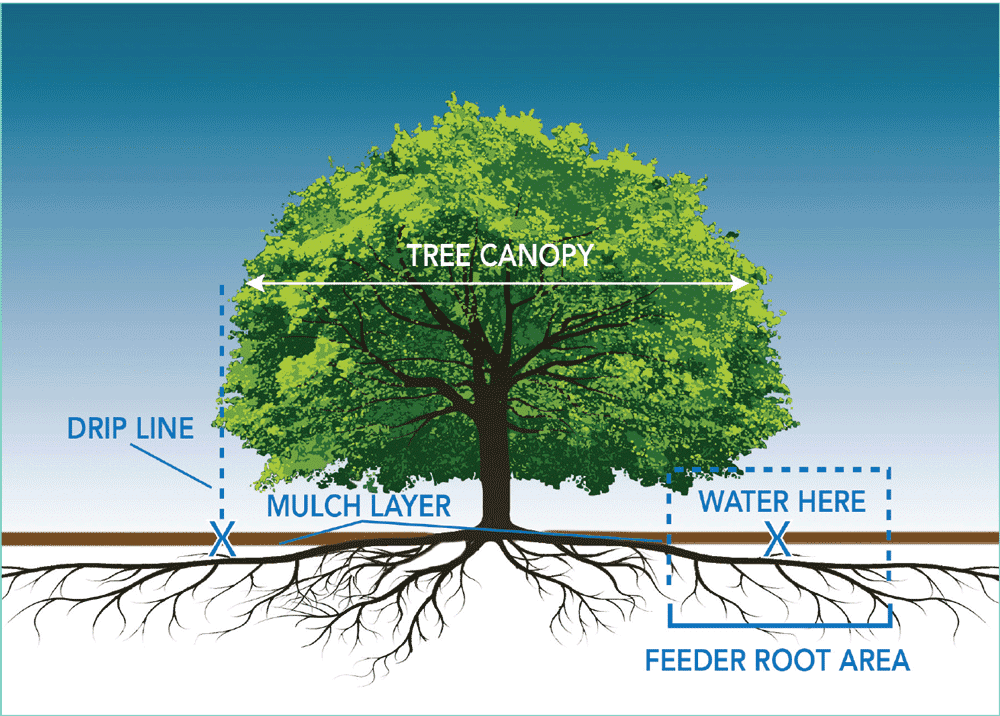
The CSU Extension has a very helpful information sheet about winter watering here. One of the most important things to remember is that winter watering should be done at the warmest part of the day, only when the temperature is 40 degrees or higher. Many of the trees we enjoy in Lowry – in particular maples and lindens – are among the most vulnerable to winter drought. Check out this guide from Denver Water on where, how, and how much to water trees. Let’s protect our trees!
This article is courtesy of LCMA eNews.